Three questions for ...
Mario Huber
Lecturer at the Department of German Studies
When people around you, your family, ask you: Why German Studies? What is your answer?
Because it interests me. Because I like working with and thinking about literature. Because I appreciate sentences that you have to read twice. Because Reclam paperbacks really do fit in trouser pockets. Because rhymes are only the beginning and not the end of good poetry. Because you always come across that one text that you wish you had read years ago... Because it really interests me. To paraphrase the philosopher Günther Neukirchner, when getting such a question you are welcome to ask back: Can't you think of anything better?
What do you like best about your work?
Teaching in all its facets. The long days of reading until you finally - or rather provisionally - find a common thread for your thoughts, along with the many discoveries and mental half-concepts that arise in the process. The search for teachable material, the balancing of units and content... and the hundreds of slides that accumulate on the computer. And then, and above all, working with the students and the constant challenge of being understood.
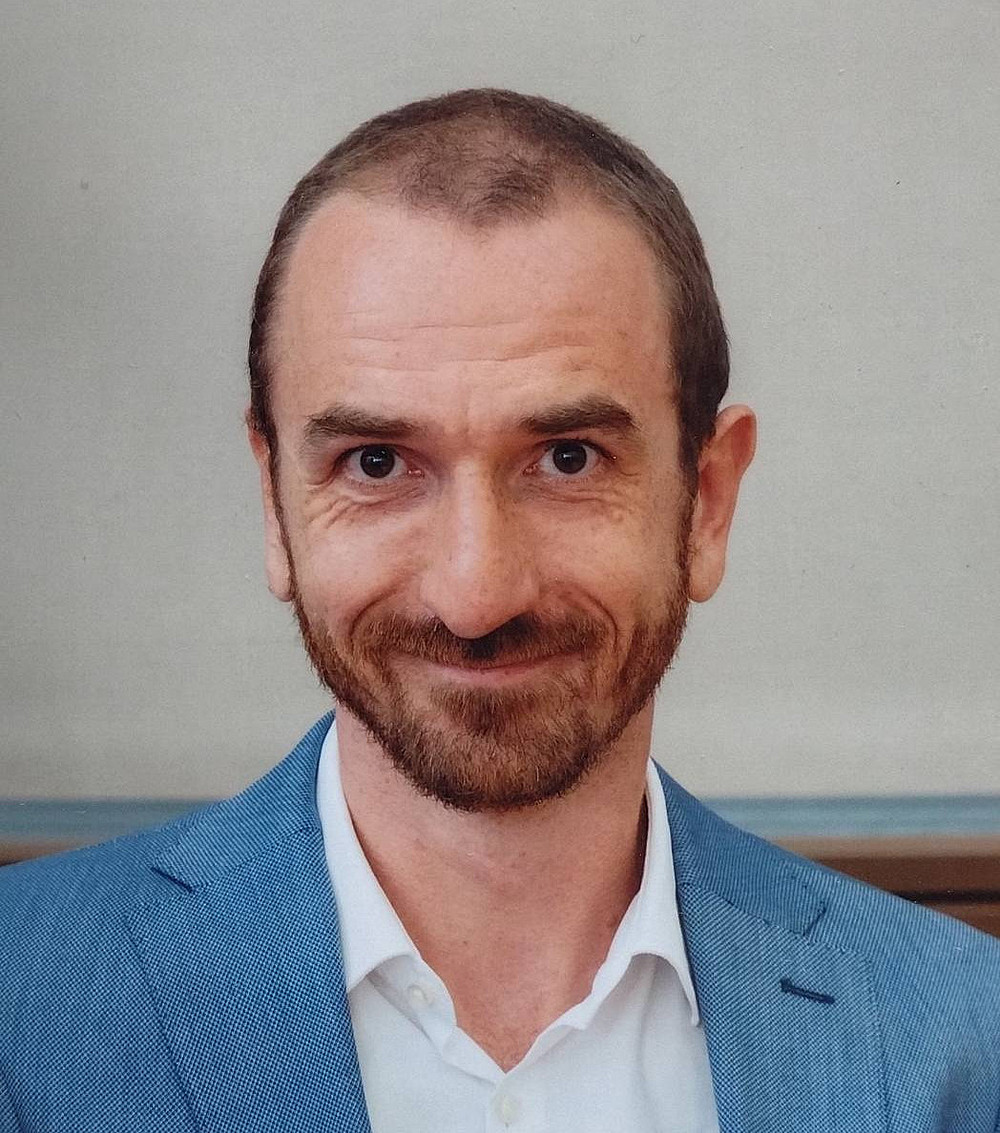
Lecturer at the Department of German Studies
What surprised or inspired you the most during your studies?
All the things that can be grouped under the heading of German studies. With a great enthusiasm for fine literature and a moderate background knowledge, I was able to get to know a lot of new things right from the start. Of course, not everything is equally interesting - and that's not a bad thing. If it's not literature that motivates me, then perhaps it's the language of youth. Or it might be medieval spells. Or, or, or. Through a broad-based course of study, with medieval studies, linguistics, literary studies, practical, theoretical, compulsory and free courses, you gradually come closer to your own enthusiasm over the years. Which means that you can finally face the Neukirchner moment within the family in a more de-escalating way, fully calibrated and anointed with real water...
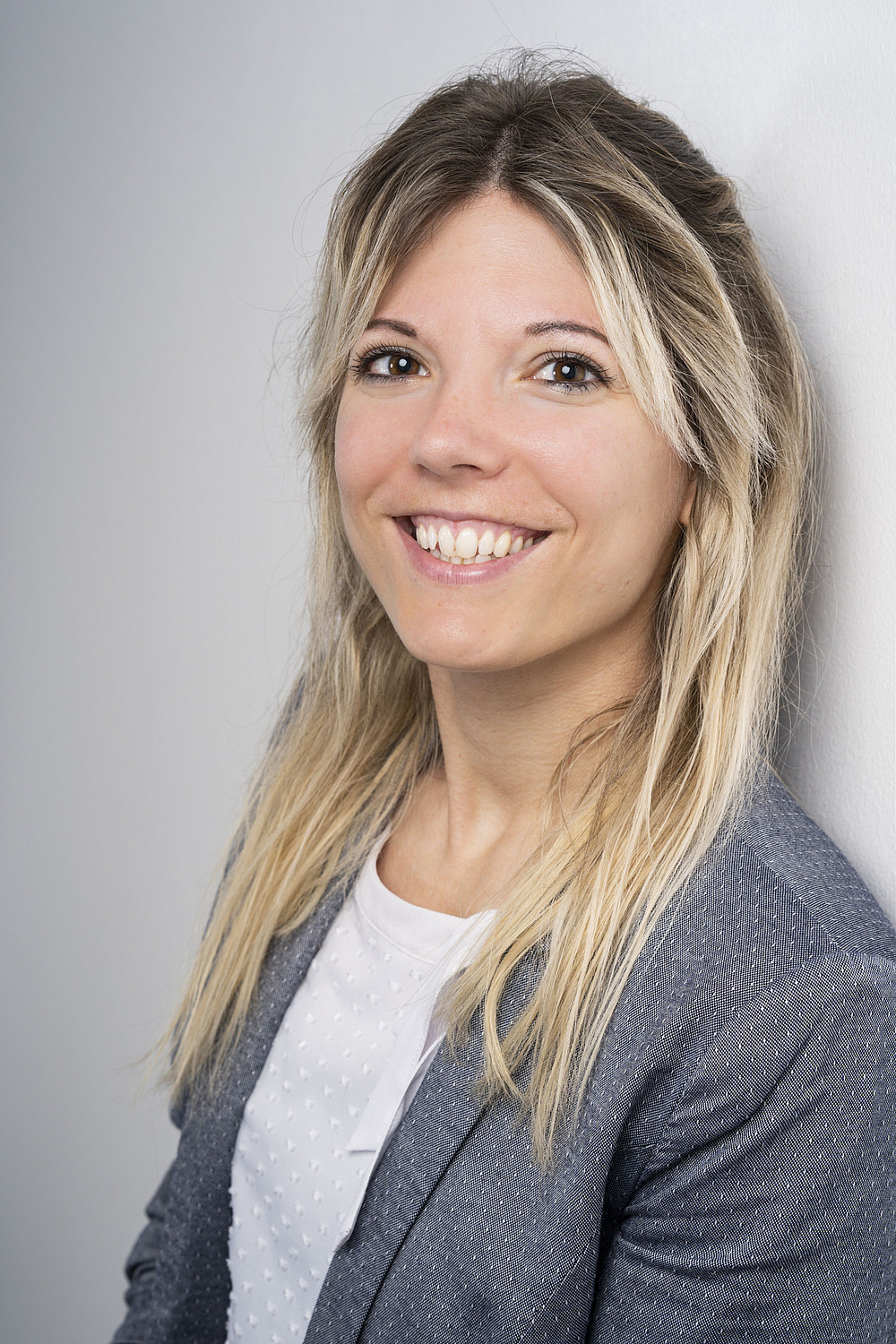
Student assistant at the Department of German Studies
Anna-Katharina Bischoff
Student assistant at the Department of German Studies
When people around you, your family, ask you: Why German Studies? What is your answer?
I have a degree in law, but I wasn't at all satisfied with this career field because it just didn't suit me. However, as I already had a plan B up my sleeve, I listened to my gut feeling and chose German Studies because of my interest in language and texts.
What surprised or inspired you the most during your studies?
What surprised me positively at the beginning of my studies was the big difference between German studies and German lessons at school. While everything was only dealt with superficially at school, I very quickly immersed myself deeper and deeper during my studies. This sparked a great deal of enthusiasm in me from the very first semester.
What fascinates you personally most about your subject area?
I chose the specialisation "German Language" for my Master's degree because I am very fascinated by linguistics. Language serves both as a carrier of thoughts and as a means of communication, and we can also access reality through language. Furthermore, language allows us to refer not only to the past but also to the future. In addition, without language, no research would be possible in any other field. So language is what fascinates me most about linguistics.
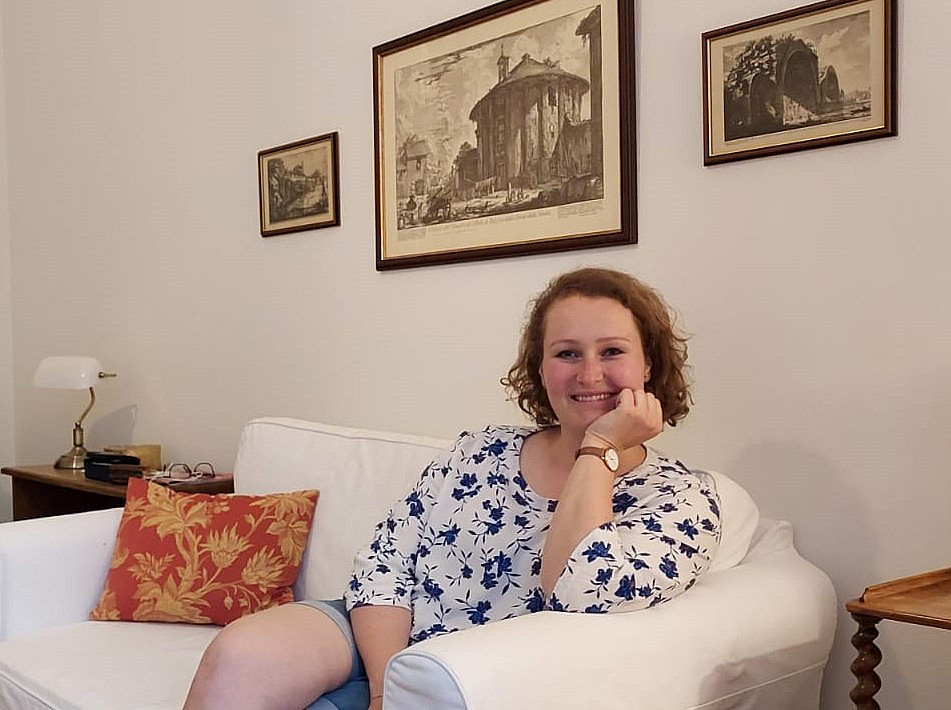
University assistant at the Department of German Studies
Isabella Managò
University assistant at the Department of German Studies
What exactly does someone who studies German medieval studies do?
We deal with language and, above all, with the literature and culture of the Middle Ages (and their reception). What is particularly interesting about literary texts is that different discourses that preoccupied people at a particular time clash in them and not infrequently come into conflict with each other, are questioned, reconciled or modified. In our field, then, we ask ourselves primarily how a medieval text produces particular meanings by revealing its literary 'madeness' and the cultural assumptions that shaped it. This gives us revealing insights into an era that continues to fascinate many people to this day, as can be seen, for example, from the successful fantasy books, films, and series that continue to create medieval-like worlds.
You came to the Faculty of Humanities at the University of Graz from Heidelberg - how do you like it here, and what are the biggest differences?
I really like it here and feel very much at home. The city of Graz is beautiful and somehow already feels Mediterranean. Not everyone has the privilege of working and living in a place where others spend their vacations! And the university and the Department of German Studies also offer a varied working environment with extremely nice, open-minded colleagues who all work on interesting research areas. The biggest difference to Heidelberg is perhaps the size of the department. Although there are also many young people studying German here, there are very few staff members with permanent contracts. On the other hand, there are also advantages of working together in a small group, because it means you quickly get to know each other and people’s different research interests.
What is the significance of medieval studies today?
When dealing with medieval literature - and this is also possible in German classes at school, for example - we are confronted with narrative worlds that are not part of people’s general experience today. This foreignness of pre-modern texts may at first seem to be a hurdle to understanding. But it is precisely the peculiar, irritatingly different ways of thinking and narrating in the texts that make us question what we take for granted and can trigger an examination of our own cultural and historical influence. The medieval world is foreign enough for us to question our habits of thought. At the same time, especially because of the language and the culture, it is close enough to be relevant for our social self-perception. This can be seen not least in the above-mentioned popular fascination with medieval worlds, figures and mythical creatures such as knights, dragons and unicorns, which evidently people still identify with to this day and can be encountered not only in children's books but also in computer games and on packets of gummy bears - in other words, everywhere.
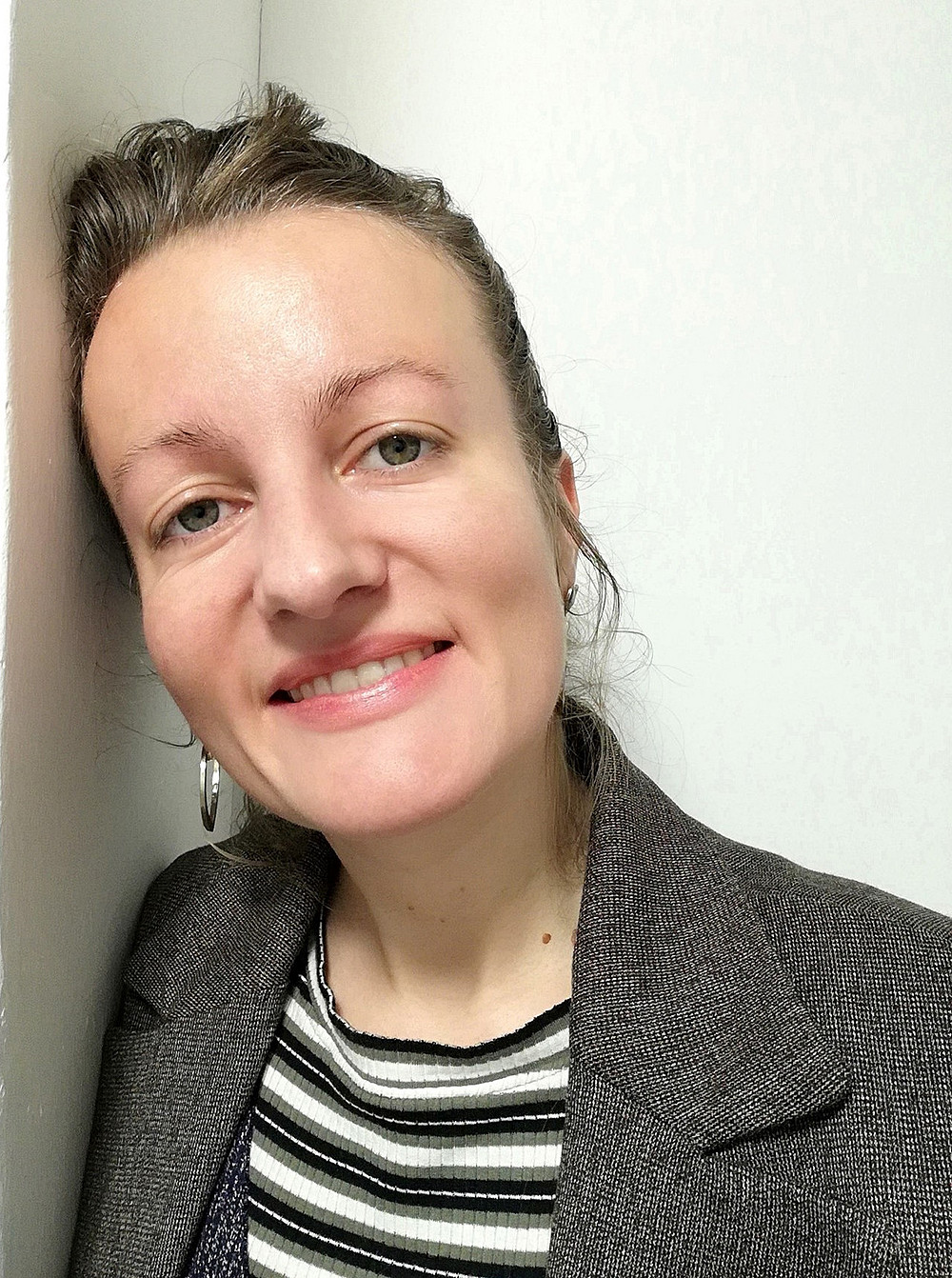
PhD student in Modern German Literature and lecturer at the Department of German Studies
Marietta Schmutz
PhD student in Modern German Literature and lecturer at the Department of German Studies
What exactly are you working on?
In my dissertation, I'm looking at German-language novels from the turn of the millennium that deal with working conditions in the age of digitalization. I find it interesting that literature predominantly presents the working world of the future as a dystopia, i.e. a negative vision. On the one hand, there are visions in which artificial intelligence has overtaken humans (in terms of productivity) and even replaced them in most professional sectors. On the other hand, there are stories about new precarious working conditions, especially in the online service sector (e.g. clickwork, content management); about how the monopolization of well-known platform companies has taken on completely new dimensions through exploitation on the one hand and the uncontrolled collection of data on the other. Ultimately, most of the novels also focus on very central questions about being human. What does it actually mean for people to work or not to be able to. Why are we working to abolish ourselves? Do we perhaps have to optimize ourselves for a new working world (keyword human enhancement), become cyborgs ourselves, so that we can compete with intelligent machines?
The topics and questions just described are also dealt with in sociological or economic research. But why is it worth examining literature in particular and what else can literary studies shed light on?
On the one hand, literature can convey moods from a society or a social structure that cannot be captured in the same way with scientific data and facts. One of the possibilities of literary representation is, for example, polyphony. Art always appeals to a certain sensitivity and empathy, which can help us not to see the (working) world and how it is changing in black and white, but to allow many to have their say and thus possibly promote tolerance of ambiguity. Last but not least, dealing with the digitalized world of work is also about the work of the writer under changed conditions of production and reception. But that would be the subject of another dissertation.
What are your professional plans for the future and what wishes do you have regarding young academics in the humanities?
After completing my dissertation, I would like to continue my research at an Austrian university and pass on the knowledge I have gained from it through teaching. For me and other young researchers in the humanities, I would like to see more financial support and structural integration in the future, especially at the doctoral level. From my own experience and from conversations with colleagues and supervisors, I know that young academics often find themselves in uncertain and/or short-term employment, while the path to the next qualification level with tenure often seems like a gamble.
Philipp Pfeifer
Project assistant and lecturer at the Department of German Studies
Does your heart beat more for research or teaching?
I think that university life thrives on the networking of research and teaching. On the one hand, teaching can benefit from research, as new findings and in-depth insights into various fields of research can be offered. On the other hand, I also consider teaching to be integral to research, as teaching and students' questions can provide a variety of impetus for existing or new research. I personally enjoy both the deep immersion and exploration of contexts as well as working for and with students.
What do you find fascinating about your field of research/your dissertation?
I am researching modal verbs in Old High German, which is a very specific topic within historical linguistics. I find it particularly fascinating to study the intellectual world of people who lived around or over 1000 years ago. I am not only interested in their view of the world, but especially in their understanding of language. How does one act creatively with a language whose written form is still in development? Which grammatical rules are used or understood as such in a society that has no codified, generally recognized rules? To what extent is the German language dependent on Latin in this early phase? And of course: what methods and ways do people of this time use to express wishes, abilities, possibilities and necessities, and how are these correctly understood?
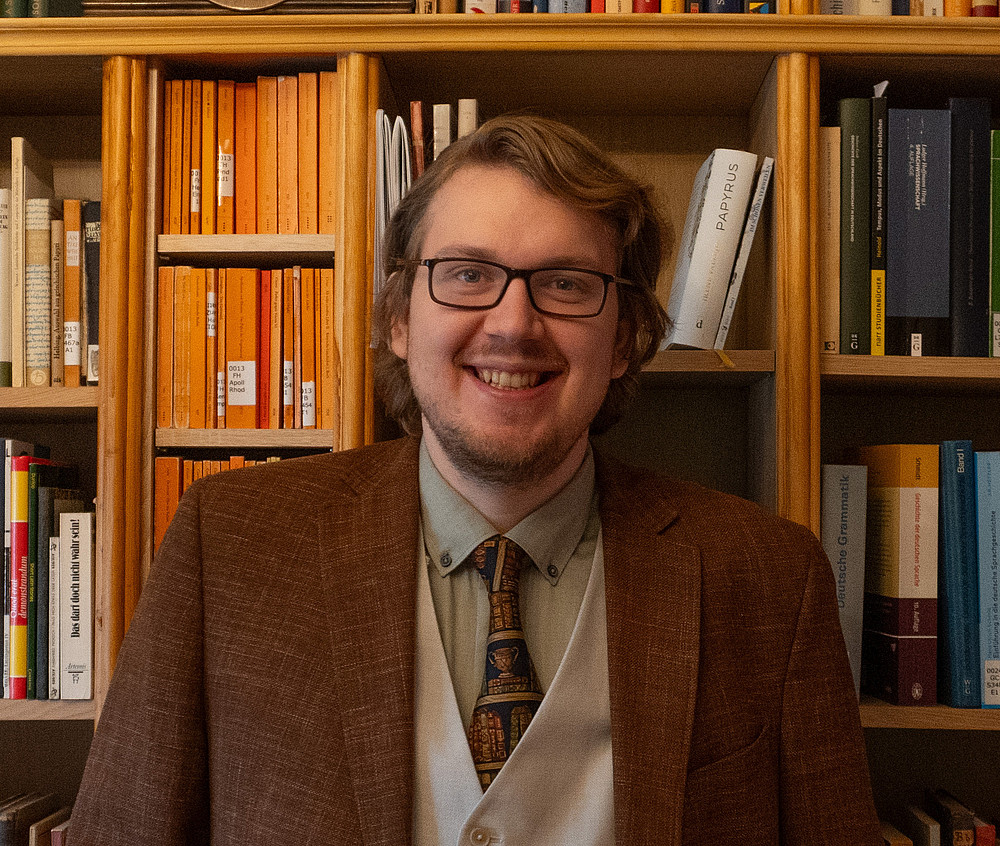
Project assistant and lecturer at the Department of German Studies
When people around you, your family, ask you: Why German studies? What is your answer?
Unlike many of my fellow students and colleagues, I didn't choose German Studies because I liked literature, but I am one of the few (it seems to me) who chose German Studies because I was already fascinated by grammar in school. The prospect of finding clear patterns and structures in something (relatively) abstract like language has always held a great attraction for me. In any case, I believe that most (if not all) of the knowledge that humans can have is based on discovering patterns and structures in the world. Combined with my great interest in language and culture, in communication within a linguistic community and between linguistic communities, the study of German offers me particularly exciting insights. And isn't the moment of realization one of the most beautiful feelings in life?
Michaela Schirnhofer
Lecturer at the Department of German Studies
When people around you, your family, ask you: Why German Studies? What is your answer?
Everything linguistic or textual as well as any form of - multimodal - communication as an ubiquitous constant in the media, in everyday life and, of course, in the most diverse humanities and social sciences drew my (research) interest at an early age and since speaking, writing and reading can probably be described as my preferred activities and both media and literature have always been my main interests, a degree in German Studies was an obvious choice. Since speaking, writing and reading have always been my favourite activities and both media and literature have always been my main interests, a degree in German studies and subsequently academic work as a specialist in German studies was very obvious, since as a linguist I wanted to research communication both in its origins and in its current manifestations. Ultimately, I turned my attention to the field of text and media linguistics and, in particular, to multimodality research, as the competent handling of text-image-sound conglomerates is now highly relevant, especially in the context of ever new types of text in the media and social media sector in particular, and there is still a lot of research work to be done here - this is a subject area that is also extremely exciting for me and that I also enjoy discussing with students.

Lecturer at the Department of German Studies
What fascinates you personally most about your field?
I am particularly fascinated by the topicality and dynamics of the research field of media linguistics and the diversity of the subject matter. Social media communication has also led to a democratization of publication relations; anyone can now produce and publish multimodal texts very easily, making these texts part of the socio-cultural discourse and thus also socio-cognitively existent. With all the advantages and the associated ever-increasing pluralism of texts represented or conveyed by the media, quality assurance is of course also an important topic, especially in the context of the fake news debate, as is multimodal competence and media literacy. The cognitive and communicative use of the new media technology possibilities requires - on both the producer and recipient side - special knowledge, or rather special knowledge about the use of the new media and thus also an awareness of their inherent potential for manipulation, but also of their knowledge-constituting power. Together with the students, I therefore analyze (mass) media multimodal texts in my courses both in terms of text semiotics and text pragmatics, which is very well received by the students and which should ultimately also lead to a more conscious approach to both the design of such texts and their reception.
What do you like best about your work?
The high level of interest that students show in media linguistics in my courses is of course an additional plus point of my research area, alongside the highly interesting and topical subject matter. On a theoretical level, in addition to the text-linguistic and semiotic approach, the linguistic-philosophical and media-theoretical approach is also very exciting, as is the transdisciplinary approach to the subject of "media and multimodality" in general. In my work, it is particularly important to me to take a research-based look at current (mass) media communication together with the students and to analyze the semiotic impact potential of both text and image and other semiotic modes as well as their interplay. The fact that you always have to deal with very current example texts and new texts makes the whole thing very interesting and dynamic. I now also receive work and text linguistic analyses on social media postings (including traditional media) or in-app advertising, for example. What they all have in common is their multimodal nature and their highly dynamic media discourse, which often blurs the boundaries between public and private communication, between information function and appeal function, etc. The current communication landscape is more diverse and richer in text types than ever before - which makes my work as a media linguist particularly exciting.